Addiction is often largely misunderstood, with many incorrectly labelling it as a lack of willpower, a moral failing or something that happens after a series of bad choices.
When, actually, addiction is much more complex. It can be shaped by a number of things, such as trauma, mental health, the environment you grew up in or who you’re surrounded by.
TED and TEDx Talks offer a powerful platform that shapes how the general public understands addiction. Through sharing personal stories, neuroscience research, and compassionate insight, these types of talks challenge the stigmas behind how people end up struggling with an addiction.
Below are five TED Talks that explore new ways of thinking about addiction in a way that is relatable and evidence-based.
Hari’s talk draws heavily on the work of psychologist Professor Bruce Alexander and his “Rat Park” experiments. This study explored how environmental enrichment and social connections reduced compulsive drug use, compared with those in isolated conditions. [1]
The studies showed that environmental enrichment and social connection significantly reduced compulsive drug consumption of rats, compared to conditions of isolation.
While addiction does alter the brain’s chemistry and involves neuroadaptive changes to the brain’s reward system, contemporary research also supports the role of social determinants such as relationships, employment status, housing stability, and wider community support in addiction risk and the likelihood of recovery.
Maté’s TEDx Talk is grounded in trauma theory, attachment research, and neurodevelopmental science.
Extensive research makes the connection between adverse childhood experiences (ACE’s), such as abuse, neglect, and household dysfunction, with significantly increased rates of substance abuse in adulthood. [2]
Neurobiological studies show that early trauma affects the brain’s stress-response systems and dopamine regulation, resulting in increased vulnerability to addictive behaviours. Trauma-informed care is now widely recognised as best practice in addiction treatment.
In this TEDx Talk, neuroscientist Rachel Wurzman explores how social isolation and loneliness influence brain systems involved in stress, reward, and emotional regulation, increasing vulnerability to opioid addiction.
Wurzman draws on findings from animal models and human neuroscience research to explain how chronic isolation heightens stress responses and alters reward pathways, making opioids more reinforcing and harder to stop using.
While the talk simplifies complex neurobiological processes and should not be treated as a standalone explanation of addiction, its core argument, that social isolation worsens addiction risk and outcomes, is well supported by public health and psychological research.
Tyndall’s talk reflects a perspective of public health and harm reduction. Harsher drug policies have been shown to increase overdose risk and stop people from accessing the healthcare they need.
Harm reduction interventions, such as opioid substitution therapy and supervised services, are related to reduced mortality rates and transmission of blood-borne viruses, and improved engagement with treatment services.
Harris builds on the landmark Adverse Childhood Experiences (ACE) Study, which establishes a strong relationship between childhood adversity and substance use, mental illness, and chronic disease in later life.
Chronic toxic stress during childhood has shown to alter brain development and stress regulation, which then increases the risk of addiction.
These study findings underpin approaches to addiction, mental health, and early intervention for addiction recovery.
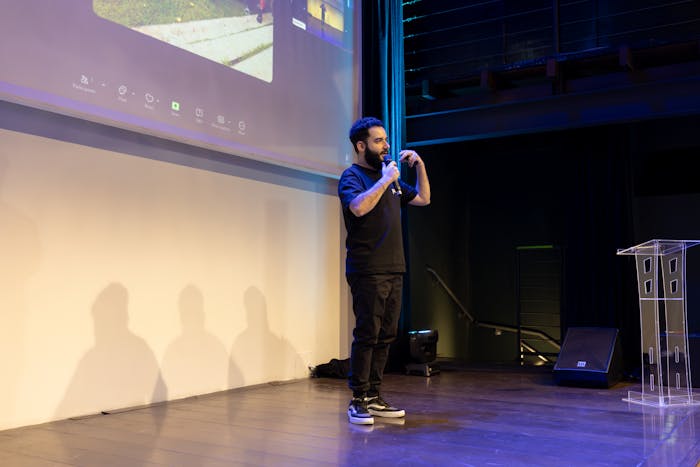
TED talks are clinically and academically important, providing a path for effective addiction treatment that addresses neurobiology, childhood trauma, mental health issues, and social environment.
This evidence-based approach improves treatment outcomes, reduces stigma, and supports sustained recovery.
Research shows that early, evidence-based intervention greatly improves recovery outcomes.
Rehab 4 Addiction supports individuals and families by providing guidance on:
Call Rehab 4 Addiction today at 0800 140 4690 for confidential, evidence-based advice.
[1] https://pmc.ncbi.nlm.nih.gov/articles/PMC3378040/
[2] https://pmc.ncbi.nlm.nih.gov/articles/PMC10106480/
Boris is our editor-in-chief at Rehab 4 Addiction. Boris is an advisor with more than 20 years in the field. His knowledge covers a broad of topics relating to addiction, rehab and recovery. Boris is an advisor and assists in the alcohol detox and rehab process. Boris has been featured on a variety of websites, including the Verywell Mind and Healthline. You can connect with Boris online at LinkedIn or X.com.
 September 6, 2026
 September 5, 2026