This World No Tobacco Day, we’re encouraging you to consider the effects, risks and diseases linked to smoking, and to explore our top tips for quitting smoking.
If you’re looking for professional help for your nicotine dependence, please don’t hesitate to get in touch with Rehab 4 Addiction on 0800 140 4690.
World No Tobacco Day takes place on the 31st May every year. Led by the World Health Organization (WHO), this day raises awareness of the harms of tobacco use and encourages people to quit smoking.
Whilst smoking rates have dropped over the years, tobacco use is still the UK’s biggest cause of cancer and preventable death (1). Tobacco kills over 7 million people each year, including around 1.6 million non-smokers who are exposed to second-hand smoke (2).
This World No Tobacco Day, whether you’re a smoker or not, why not join us in exploring the risks of smoking, and the benefits of quitting?
As we’ve discussed, smoking is one of the biggest preventable causes of disease in the UK. This includes cancer, respiratory illness, and heart disease.
Although education on the dangers of smoking has improved in recent years, people around the world continue to become dependent on nicotine. It’s a highly addictive drug, meaning people who only intend to try it once or twice can easily end up using it long-term.
This is particularly true for anyone who struggles with their mental health. Smoking is a common coping mechanism for depression, anxiety, and other mental health conditions, but it can exacerbate these disorders and create a vicious cycle.
Nowadays, people are turning to new forms of nicotine use, such as vaping. As side effects are still not widely established, the risks are yet to be known, but regardless, it’s clear that the act of smoking or vaping damages your body.
Smoking can cause various harmful side effects on the body, both short-term and long-term.
Passive smoking is when you inhale someone else’s smoke. Even though you aren’t smoking yourself, you’re still breathing in the tobacco, which can have the same harmful effects as smoking.
Passive smoking affects everyone, but it’s particularly harmful to:
Quitting smoking is the best way to prevent passive smoking. However, we understand that you may struggle to quit, or you may have people in your life who smoke regularly, so here’s how you can avoid passive smoking.
Smoke builds up within homes and cars, staying in the air and on furniture for hours. As you can imagine, this can cause serious invisible damage.
The best solution is to completely avoid smoking inside your house and car, and make sure no one else smokes in these areas either. Take particular caution if there are vulnerable people in your home, including children and pregnant women.
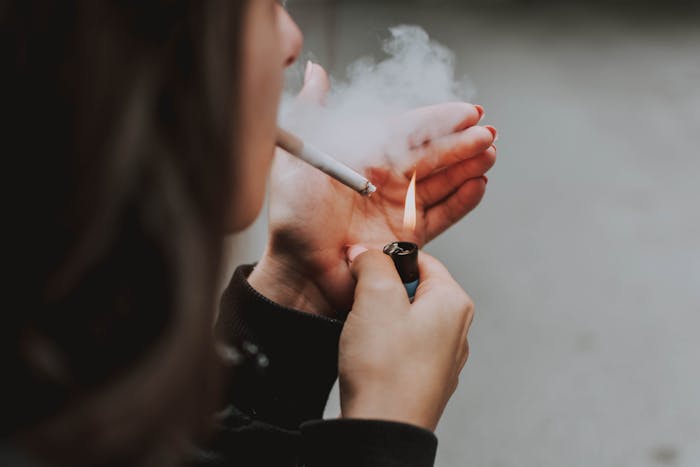
Smoking is ingrained in people’s daily lives. Thanks to the normalisation of smoking, people often turn to it during work breaks, on nights out, or with their morning coffee.
Because of this, we often think of smoking as “just a bad habit”. This way of thinking contributes to addiction rates, as it makes people think smoking is mostly harmless.
This World No Tobacco Day, we’re not beating around the bush. Smoking is a harmful addiction, not just a bad habit.
People often smoke to cope with stress, and this is because nicotine triggers feelings of relaxation. Once you’ve felt this feeling, especially if you’re going through a stressful time, it can be difficult to stay away from nicotine.
For many people, this eventually becomes an addiction. Their bodies adapt to nicotine, which means they need more of it to feel the same effects (tolerance). They smoke multiple times a day, they crave nicotine when they can’t access it, and they get withdrawal symptoms.
Quitting any addictive substance is challenging. When your body and mind have become reliant on nicotine, it’s incredibly tough to withdraw from it. However, the sooner you do it, the better.
Some people mistakenly believe quitting smoking is all about willpower. A resilient person can quit much more easily than the next person.
Yet, with addiction, many factors are at play, and you can’t solely rely on willpower.
Instead, a multi-faceted approach is the most effective. Getting professional help that covers the physical and psychological angles, seeking support from loved ones, and reminding yourself why you want to give up.
Residential rehab is the ideal place to start your recovery journey. It provides you with a high level of support that continues even after you leave (aftercare), and helps you to stay sober long-term.
If rehab isn’t suitable for you, try going to your GP, who will help you to explore other options, including therapy and outpatient treatment. You can also start to implement some strategies into your life, including:
People often don’t realise the full benefits of quitting smoking until years after they give up. It can lead to:
The consequences of smoking can be disastrous, but the benefits of quitting are endless.
We know how tough it is to do it alone, so we help you find the support you need to withdraw from nicotine safely, with a reputable treatment centre.
Give us a call on 0800 140 4690 (UK) or +44 345 222 3508 (international) to find out how you can kickstart your recovery journey today.
Below, we answer some common questions around this topic:
Vaping is much safer than smoking, but that doesn’t mean it comes without risks.
It still contains nicotine, making it easy to develop an addiction, and it can cause an elevated heart rate and lung inflammation. We also haven’t studied vaping for long enough to know the full effects, so it’s something to be wary of.
Yes, you can stop smoking without professional help. However, it’s recommended to seek professional support, especially if you’ve had this addiction for a long time, or it’s a moderate to severe addiction.
Staying away from smoking long-term is no easy task, and medical professionals can recommend tools for this.
[1] https://www.who.int/news-room/fact-sheets/detail/tobacco
Boris is our editor-in-chief at Rehab 4 Addiction. Boris is an advisor with more than 20 years in the field. His knowledge covers a broad of topics relating to addiction, rehab and recovery. Boris is an advisor and assists in the alcohol detox and rehab process. Boris has been featured on a variety of websites, including the Verywell Mind and Healthline. You can connect with Boris online at LinkedIn or X.com.
 September 6, 2026
 September 5, 2026